The factories I saw in China were closer to being green than anything I've heard about in America. The workers lived within walking distance of their jobs and ate communal meals. Sunlight was used in place of electric lights, fans instead of air conditioning. Nothing was purchased unless it was absolutely necessary, there weren't even chairs, most people stood while they did their jobs. Cleaning was avoided, the architecture was simple and reusable.
If the factories I saw were hooked up to nuclear power plants (the Chinese are building them) and the plastics were replaced with something biodegradable or recycled (which will happen naturally as prices for those items come down) the factories would be greener than anything possible in America.
So how can we compete?
Right now our green jobs only exist because we subsidize them with money the government borrows. They aren't profitable. We don't even know if the technologies we've chosen to invest in will be the ones favored in the future. Meanwhile, the Chinese have an economy that can turn a profit, create jobs, and produce things people are willing to buy. We don't have that experience. If the green economy ever materializes, the Chinese will have no problem taking every job we've created away. They can do it cheaper and greener. They only have to take the jobs they already have and make them green, while we haven't even figured out how to make jobs, let alone green ones.
While we've borrowed money hoping to be prepared for tomorrow, the Chinese have been making money dealing with today's world, and developing the flexibility to deal with tomorrow's. America's "green jobs" are jobs for a future that may or may not come, and even if it does, probably wont want them.
Showing posts with label how China is better than America. Show all posts
Showing posts with label how China is better than America. Show all posts
Monday, August 30, 2010

Friday, August 27, 2010
Advertising = Art
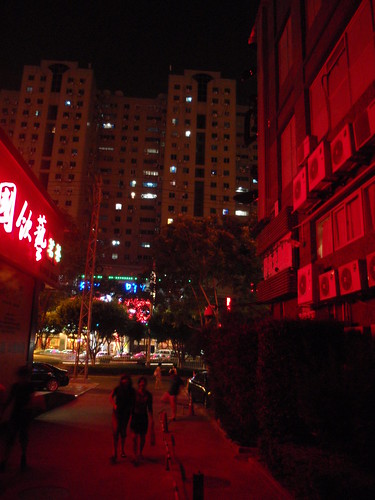
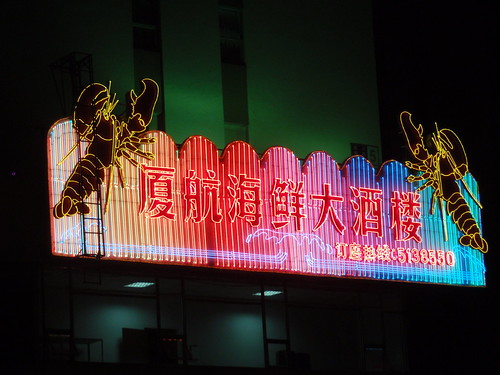
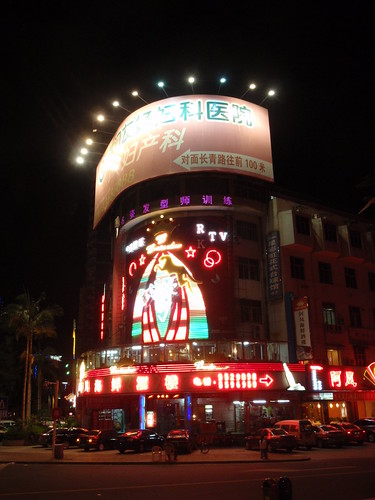
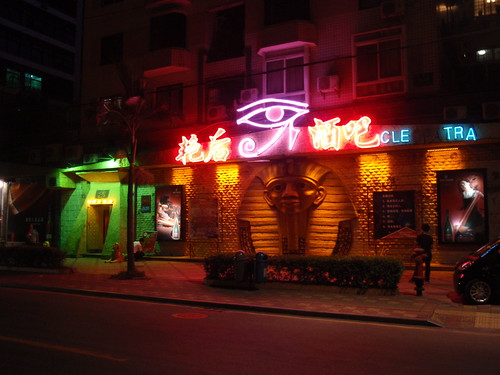
I had a wonderful time walking around Xiamen. The city doesn't come alive until after dark. Many buildings are covered in garish advertisements and amazing light displays. But it's not unusual to see streets and alleys with no lights, even street lights. It might sound scary, but you feel safe because there are so many people. And even in dark alleys there might be vendors grilling food or people sitting in the street in front of their businesses.
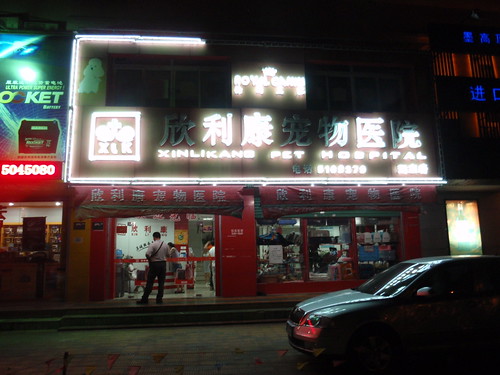
The advertising I saw at night in China makes me realize there is an art movement we in America barely know about. Strange to say, the art form is advertising, and in Xiamen I saw works that could rival anything by Michelangelo. We work so hard to keep our cities clean of billboards and signs, and what do we have? Boring architecture to look at. But in China every modern building is an art gallery, some with displays that change by the week.
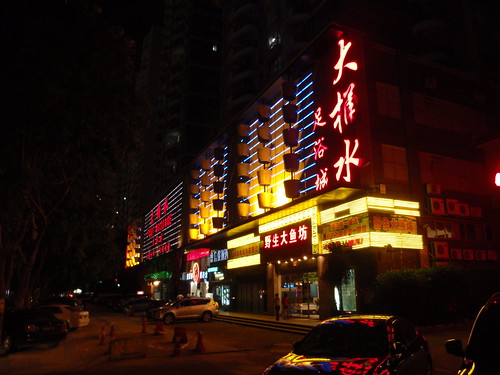

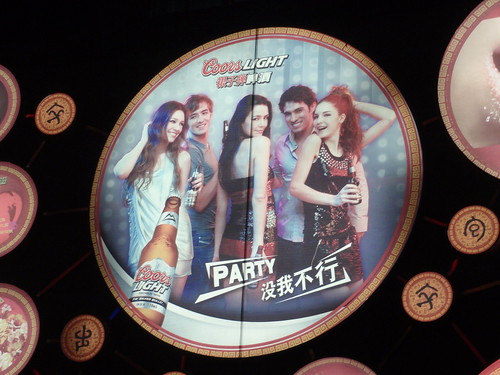
This is all one building, note how the advertising (using Western models), is incorporated into the building's decoration:
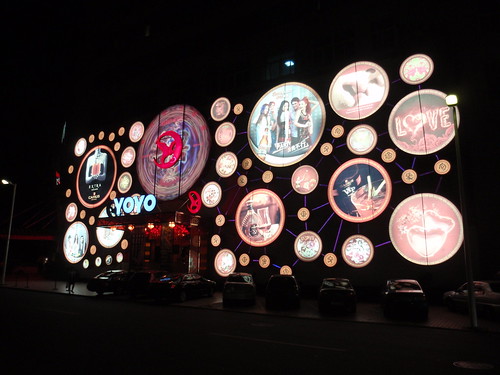
This is the front of the building, many of these signs have motion:
One big sculpture of light:
More examples of common place decorations/advertisements:
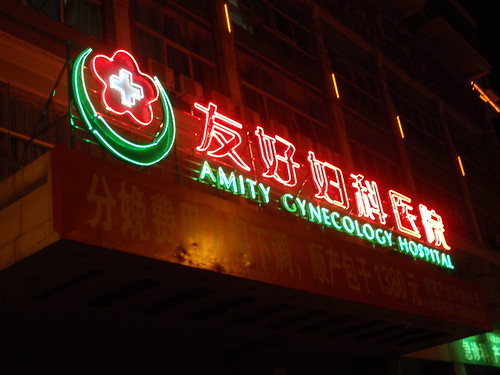
Even places as mundane as pet hospitals and gynecological hospitals can light up a neighborhood:
Update: I take my ideas on a walk, and they seem to have legs.
The advertising I saw at night in China makes me realize there is an art movement we in America barely know about. Strange to say, the art form is advertising, and in Xiamen I saw works that could rival anything by Michelangelo. We work so hard to keep our cities clean of billboards and signs, and what do we have? Boring architecture to look at. But in China every modern building is an art gallery, some with displays that change by the week.
This is all one building, note how the advertising (using Western models), is incorporated into the building's decoration:
This is the front of the building, many of these signs have motion:
One big sculpture of light:
More examples of common place decorations/advertisements:
Even places as mundane as pet hospitals and gynecological hospitals can light up a neighborhood:
Update: I take my ideas on a walk, and they seem to have legs.
Sunday, August 15, 2010
The homeless
I saw two beggars the entire time I was in China, and they had real problems (one of them had no legs). There were plenty of people selling stuff on the side of the street though. Why don't we have that in America? Because it's illegal. Our unintended consequence of banning most street vendors is beggars everywhere. And our only response to beggars is to try to ban them or force them to live as dependents, instead of letting them be productive members of society.
We have a sick society in some respects and it's our own fault.
We have a sick society in some respects and it's our own fault.
Thursday, August 12, 2010
Roads to nowhere
I just got back from China and I realized something as I was driving home from the airport. A lot has been made in America about "the bridge to nowhere" and other wasteful government infrastructure projects, but almost every road we have here is a road to nowhere; we don't have the population density to support them. What makes it especially wasteful is that we also have zoning laws to purposely keep the population density low.
I understand many people dream of living in a house in the country, but the laws we enacted to
protect those dreams haven't worked. We don't have homes in the country, we have suburban sprawl. We live next to gas stations, or in trailer parks, or in neighborhoods that are empty most of the time. It's no wonder taxes are high when so much land is taken up by roads. It's no wonder we can't support basic manufacturing when workers need to be paid enough money to buy a car, pay for car insurance, and pay for gas. By fighting urbanization we have crippled the future of America and disfigured its countryside.
I understand many people dream of living in a house in the country, but the laws we enacted to
protect those dreams haven't worked. We don't have homes in the country, we have suburban sprawl. We live next to gas stations, or in trailer parks, or in neighborhoods that are empty most of the time. It's no wonder taxes are high when so much land is taken up by roads. It's no wonder we can't support basic manufacturing when workers need to be paid enough money to buy a car, pay for car insurance, and pay for gas. By fighting urbanization we have crippled the future of America and disfigured its countryside.
Subscribe to:
Posts (Atom)